Customization Trends: Colored uPVC Windows & Powder-Coated Aluminum Frames


Choosing between uPVC and aluminium windows comes down to three things: what you want to spend now, how long you want the windows to last, and how much heat and noise you need to keep out. This guide puts the costs side by side, compares the two materials point by point, and explains which one suits which kind of home in Indian conditions.
Quick answer
- Choose uPVC if budget comes first, you want the best heat and sound insulation for the price, and you are happy with standard white or wood-finish frames.
- Choose aluminium if you want slim frames, large glass, sliding or bi-fold systems, more colour options and the longest lifespan. Ask for thermal-break profiles if insulation matters.
What are uPVC and aluminium windows?
- uPVC (unplasticised polyvinyl chloride) is a rigid plastic. It does not conduct heat well, so it insulates naturally, and it needs no painting. Frames are usually reinforced with galvanised steel inside.
- Aluminium is a strong, lightweight, corrosion-resistant metal. Its strength lets frames stay slim while holding large glass panes, which is why it is used for modern homes, sliding systems and commercial facades.
Cost difference between uPVC and aluminium windows
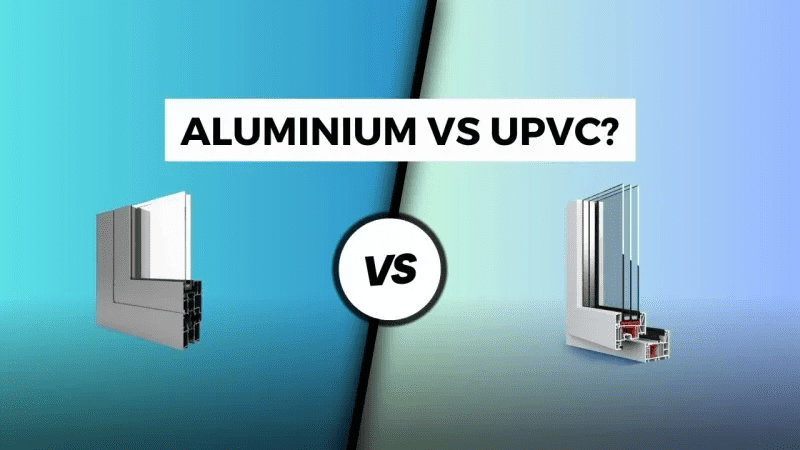
uPVC is cheaper to make and lighter to install, so it costs less up front. Typical ranges we see in Hyderabad are:
| Cost (per sq ft) | uPVC | Aluminium |
| Window frame and glass | ₹250–₹500 | ₹450–₹900 |
| Installation | ₹100–₹200 | ₹150–₹300 |
| Approximate total | ₹350–₹700 | ₹600–₹1,200 |
What pushes the price up for either material:
- Glass type: toughened, laminated or double-glazed glass costs more than plain glass.
- Finish: powder-coated or anodised aluminium in custom colours, or wood-grain uPVC.
- System: sliding, lift-and-slide and bi-fold systems cost more than fixed or casement windows.
- Thermal-break aluminium profiles, which close most of the insulation gap with uPVC.
These figures are a guide. The exact price depends on window sizes, the system you pick and site conditions, so it is worth getting a measured quote.
uPVC vs aluminium: side-by-side comparison
| Factor | uPVC | Aluminium |
| Upfront cost | Lower | Higher |
| Lifespan | 20–30 years | 30–50 years |
| Heat insulation | Excellent | Good with thermal break |
| Sound insulation | Very good | Very good with the right glass and seals |
| Strength and frame size | Thicker frames | Slim frames, larger glass |
| Colours and finishes | Mostly white, grey, wood-grain | Wide range, powder-coated or anodised |
| Sun and heat exposure | Cheaper grades can fade or turn brittle | Does not warp or fade |
| Maintenance | Low; white frames show dirt | Very low |
| Recyclable | Limited | 100% recyclable |
| Best for | Budget homes, rentals, bedrooms facing busy roads | Modern homes, villas, large openings, offices |
Factor by factor
Durability and lifespan
Aluminium does not warp, rot, swell or crack, and it holds its finish for decades, typically 30–50 years. uPVC usually lasts 20–30 years. Under strong sun, cheaper uPVC can expand, fade or become brittle over time, which can weaken the seals. Good multi-chamber uPVC profiles last longer.
Winner: aluminium.
Heat insulation and energy efficiency
uPVC is a poor conductor of heat, so it keeps rooms cooler in summer and can noticeably reduce AC load. Standard aluminium conducts heat, so it insulates less well. Thermal-break aluminium profiles add an insulating barrier inside the frame and come close to uPVC, at a higher price. Double-glazed glass helps either material more than the frame choice alone.
Winner: uPVC, unless you choose thermal-break aluminium.
Design and looks
Aluminium’s strength allows slim profiles, floor-to-ceiling glass and smooth sliding or bi-fold systems, in almost any colour. uPVC frames are thicker, colour choice is narrower, and large sliding systems are harder to do well.
Winner: aluminium.
Maintenance
Both are low-maintenance and never need painting. Aluminium usually needs only a wipe with a damp cloth. uPVC needs cleaning with mild soapy water every few months, and white frames show dust and can discolour in constant sun. Lubricate hinges and locks once a year on either.
Winner: aluminium, narrowly.
Security
Aluminium frames are stronger and harder to force. uPVC frames rely on internal steel reinforcement. With good multi-point locks and toughened or laminated glass, both can be made secure.
Winner: aluminium.
Which is better for Indian weather?
India’s climate is hard on windows: very hot summers, heavy monsoons, humidity, dust and, in coastal cities, salt air. In a city like Hyderabad, with summer temperatures above 40°C and a strong monsoon, both materials work well when they are good quality and properly installed:
- For west- or south-facing rooms that heat up, uPVC or thermal-break aluminium with double glazing keeps rooms cooler.
- For large balcony openings and living rooms, aluminium sliding systems handle wide spans and heavy glass better.
- Avoid cheap, unbranded uPVC in full sun. It is the version most likely to fade and warp.
What about wooden windows?
Timber looks warm and traditional, but in Indian conditions it swells in humidity, cracks in heat and attracts termites. It needs repainting or varnishing every few years plus termite treatment. It suits heritage homes where the look matters most; for most homes, uPVC or aluminium is far less work.
Which should you choose?
| Your situation | Best choice |
| Tight budget, standard window sizes | uPVC |
| Rental flat or quick renovation | uPVC |
| Bedroom on a busy road | uPVC or aluminium with acoustic glass |
| Large balcony or living-room opening | Aluminium sliding |
| Modern villa or forever home | Aluminium (thermal-break if budget allows) |
| Office, showroom or glass partitions | Aluminium |
| Want a specific colour to match interiors | Powder-coated aluminium |
Many homes use both: aluminium sliding systems for balconies and living areas, and uPVC for bedrooms and bathrooms. That often gives the best balance of cost, insulation and looks.
Long-term value
uPVC wins on upfront cost. Aluminium often wins over the life of the building, because it lasts longer, keeps its finish, is easier to modify or extend later, and is fully recyclable. If you plan to live in the home for 20+ years, compare the cost per year of life, not just the price per square foot.
Frequently asked questions
Are aluminium windows more expensive than uPVC?
Yes, usually. Installed, uPVC is roughly ₹350–₹700 per sq ft and aluminium roughly ₹600–₹1,200 per sq ft, depending on glass, finish and system. The gap narrows for basic aluminium and widens for thermal-break or premium sliding systems.
Which is better, uPVC or aluminium windows?
Neither is better everywhere. uPVC is better value for insulation on a budget. Aluminium is better for strength, slim modern frames, large openings and lifespan.
Do uPVC windows turn yellow in Indian sun?
Good-quality, UV-stabilised uPVC resists yellowing. Cheaper profiles can fade or discolour after years of direct sun, which is why brand and profile quality matter.
Which is better for noise reduction?
The glass and seals matter more than the frame. uPVC seals tightly by design; aluminium matches it with good gaskets and laminated or double-glazed acoustic glass.
How long do uPVC and aluminium windows last?
uPVC typically lasts 20–30 years and aluminium 30–50 years with basic care.
Planning windows in Hyderabad? See our uPVC windows in Hyderabad and aluminium windows in Hyderabad, or call +91 90309 78715 for a free site visit and a measured quote for both options.