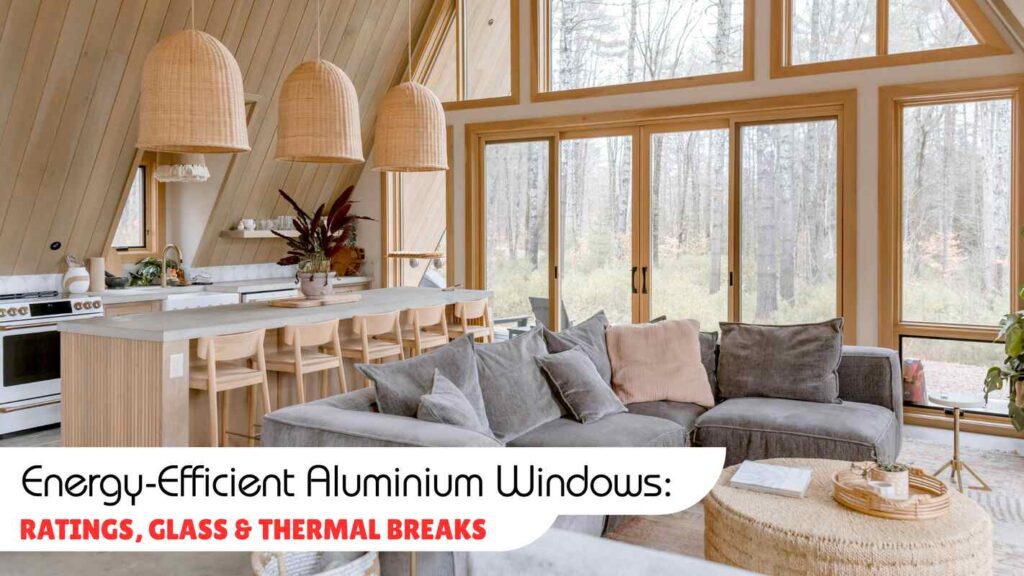

Energy-Efficient Aluminium Windows: Ratings, Glass & Thermal Breaks

Aluminium Windows & Doors for Heritage & Traditional Homes
While you invest in the new aluminium window, you may primarily focus on the frame quality. However, you may overlook one of the most critical aspects of the components – the glass itself. Yes, there are different types of glasses used for the windows.
That is why it is important to choose the right glass based on the specific needs that you may have. This blog helps you find the exact type of glass that you should choose.
Why do aluminium window glass types matter?
Your windows play a very significant role in heat gain and loss in your home. The regular glass allows approximately 80% of heat to pass through freely. That would make the air conditioning of your home work harder.
Choosing the right glass type can reduce energy consumption by up to 50%, lower your cooling bills by INR 7,800 to INR 10,000 annually (for a single room), and improve overall comfort in your living spaces.
The type of glass you select would have a bearing on safety features, noise reduction, UV protection, and how well your windows withstand India’s diverse climate conditions.
Aluminium window glass types
Let us now explore the different aluminium window glass types and how they impact the functionality.
Low-Emissivity (Low-E) Glass: The Energy-Saving Champion
Low-E glass is coated with a special microscopic layer of metallic oxide that reflects infrared radiation (heat). Meanwhile, it lets the natural light to pass through. This property should make it ideal to reduce the heat transfer without affecting the natural light.
Key benefits of Low-E glasses
The low-E glass offers the following plus points –
- Lowers indoor temperature by 4-8°C
- Reduces AC load by approximately 30%, translating to monthly cooling costs of INR 1,500 or less
- Blocks harmful UV rays that cause furniture and fabric fading
- Maintains natural light without excessive glare
- Works best in south and west-facing windows with direct sunlight exposure
Tempered (Toughened) Glass: Strength and Safety
Tempered glass undergoes a specialized heating and rapid cooling process. That should make the glass stronger than the standard glasses. The manufacturing process heats glass to approximately 650°C, then rapidly cools it using compressed air.
Key benefits of the tempered glass
- The tempered glass is 4-5 times stronger than regular float glass.
- It offers perfect hat resistance properties. That should make them ideal for the Indian climate
- It cannot be cut. This provides the best security for your home.
- These glasses are highly cost-effective.
Laminated Glass: The Security and Comfort Choice
Laminated glass consists of two or more glass panes bonded together with a polyvinyl butyral (PVB) interlayer. The manufacturing uses the same technology as that used in the windshields. When broken, the PVB layer holds glass fragments in place, preventing them from scattering.
Key benefits of laminated glasses
- They offer a high degree of safety and security. These glasses are powerful in cases of accidental impacts.
- They also offer superior UV protection.
- The noise reduction offered by the tempered glasses is quite exceptional.
- These glasses are repairable. If a pane breaks, you can replace the broken pane alone.
- They also offer a high degree of customisation
Here is a tempered vs laminated glazing comparison to help you make the right choice-
| Feature | Tempered Glass | Laminated Glass |
| Strength | 4-5x stronger for impact resistance | 100x stiffer but lower impact strength |
| Safety on Breakage | Shatters into small, blunt pieces | Fragments held by the PVB interlayer |
| Heat Resistance | Superior in extreme temperatures | More prone to thermal stress |
| Soundproofing | Minimal noise reduction | Excellent sound barrier |
| UV Protection | Limited | Blocks 99% UV rays |
| Cost | Budget-friendly (₹85-170/sq ft) | Premium option (₹350-550/sq ft) |
| Maintenance | Easy to clean | Easy to clean, but more delicate |
| Repair Options | Complete replacement only | Sometimes repairable |
| Best For | Strength-focused applications | Security and comfort-focused homes |
How to select the Right Glass for Your Specific Needs?
For maximum energy efficiency
We recommend Double-glazed IGU with soft-coat low-E glass.
Benefits – It can reduce heat transfer by 50%. It can block solar radiation and maintain natural light.
For Maximum Safety and Durability
Our recommendation would be Laminated glass (preferably tempered-laminated combination).
Benefits – It can hold together on impact. It can block UV rays. You can be assured of security against break-ins, and it provides sound reduction.
For Budget-Conscious Renovations Without Safety Compromise
Our recommendation for this scenario would be tempered glass.
Benefits- It offers you necessary safety options at a lower cost. The glass also provides you with good heat resistance. It is widely available in India and thus provides you with the best budget options.
For Urban Homes with Noise Concerns
We recommend Laminated glass in double-glazed units.
Benefits – The combination of PVB interlayer and double-glazing provides the best noise reduction available.
For West or South-Facing Windows in Hot Climates
Based on our experience, we would recommend Low-E glass with solar control properties.
Benefits – It can help reflect the direct sunlight while maintaining brightness, keeping rooms cool, and reducing AC strain.
Conclusion
Selecting the right glass for your home would be one of the most essential decisions you would make. Of course, the frames and installation quality do matter a lot. But, at the same time, you should also look for the glass used in the windows.
The choice between low-E, tempered, and laminated glass shouldn’t be based on price alone. Instead, consider your specific priorities. The recommendations that we have provided above should ideally help you achieve the best standards possible in this context.
FAQs
Can I use soft-coat low-E glass in a single-pane window?
No. Soft-coat low-E glass must always be sealed inside a double or triple-glazed insulated glass unit. The coating acts like a sponge and oxidizes if exposed to air.
Will condensation appear on my low-E windows?
External condensation (on the outside surface) is completely normal and harmless. Low-E glass is so efficient at keeping heat inside that the outer pane stays cold, and morning dew condenses on it.
How long does low-E glass last?
When properly sealed in an insulated glass unit with professional installation, soft-coat low-E glass lasts 20+ years or longer. Most manufacturers offer warranties of 10-25 years on the glass itself. In fact, that should be one of the prime low-E glass benefits India.
Can low-E glass reduce heating costs in winter?
Yes, though the benefit is less dramatic in most Indian regions where heating isn’t a primary concern. Low-E glass reflects interior heat back into the home rather than allowing it to escape.